
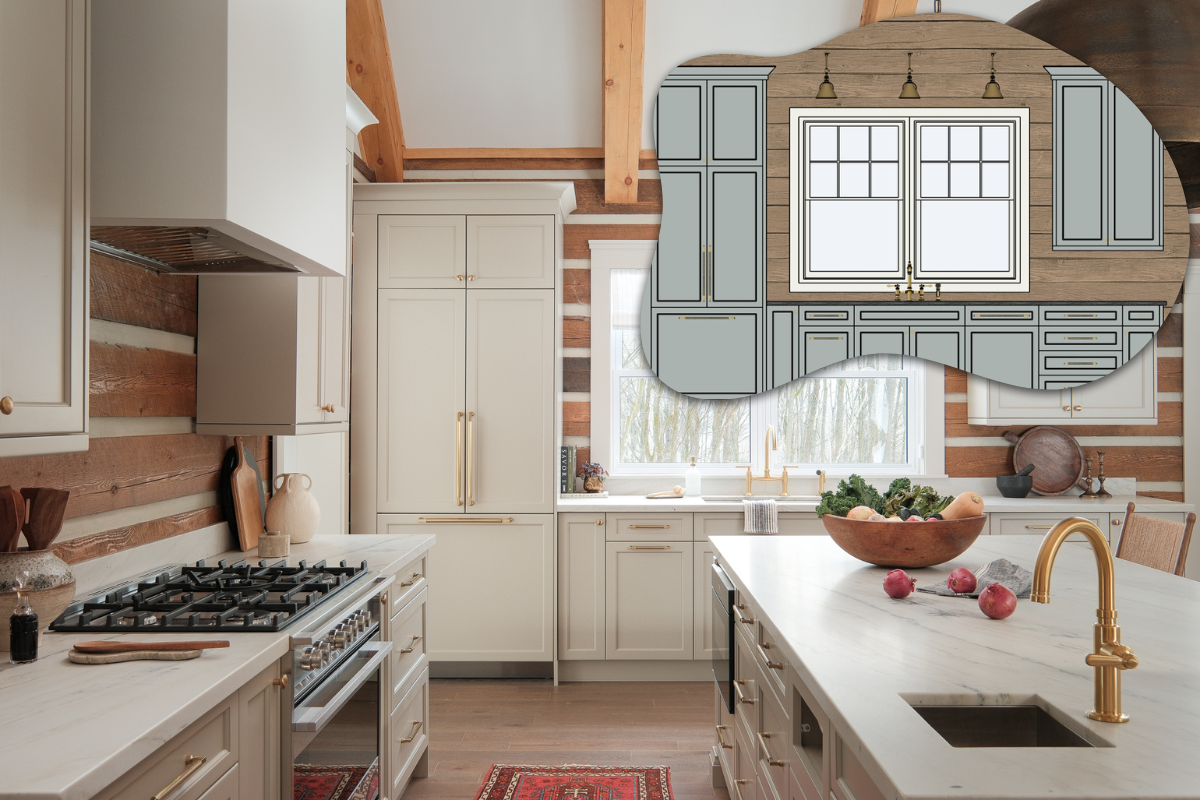
Building a kitchen is one of the most expensive things you can do to a home. Custom cabinetry alone can run tens of thousands of dollars. Countertops, appliances, lighting, tile, hardware: the costs stack quickly, and the decisions compound.
The challenge is that most people cannot visualize a finished space from a floor plan and a materials sample. They approve a design on paper and do not truly see what they have agreed to until the cabinets are in and the countertops are templated. At that point, changes are costly or impossible.
This is why we use 3D renderings before anything gets built.
What a Rendering Actually Shows You
A 3D rendering is a photorealistic visualization of your space. It shows the layout, the cabinetry, the countertops, the lighting, the flooring, and how all of those elements interact in real conditions.
When you look at a rendering of your kitchen, you are seeing:
How the upper and lower cabinets relate proportionally
Whether the island is the right scale for the room
How the countertop colour reads against the cabinet finish
Where light falls and how hardware reads at distance
The overall composition before a dollar is spent on materials or labour
It is the difference between hoping the design works and knowing it does.
Why This Matters for Custom Cabinetry
Custom cabinetry is built to your exact specifications. Unlike stock cabinets, there is no returning it if the proportions are off or the finish does not read the way you expected. What you approve is what gets built.
With a decade of experience in custom cabinetry design, Beverly has seen what happens when clients commit to a specification without fully seeing the outcome. The rendering closes that gap. It gives you the chance to adjust door profiles, change a finish, rethink a layout, or confirm that your first instinct was right, all before the shop begins cutting.
The Process
Once the design phase is underway, we develop the space in 3D alongside the technical drawings. You will see your kitchen from multiple angles, including eye-level views that approximate how the space will actually feel when you are standing in it.
We use this stage to work through the fine details: the height of the uppers, the depth of the island overhang, the trim details on the perimeter cabinets. When changes happen at the rendering stage, they cost nothing. When they happen during fabrication, they are expensive. When they happen after installation, they are often not possible.
Renderings for Scoped-Down Projects
Not every project is a full kitchen renovation. For clients in Peterborough, Kawartha Lakes, and Northumberland County who want to explore a specific element, such as replacing a front door and windows, updating a fireplace surround, or rethinking a single room, we offer scoped-down rendering projects.
This gives you a clear visual of the proposed change, in context, before committing to the cost of the work. It is a low-risk way to make a high-confidence decision.
What You Take Away
At the end of the rendering phase, you have a clear picture of what you are building. Your contractor has the same picture. Your cabinetry fabricator has the same picture. Everyone is working from shared expectations, which is the single biggest factor in a renovation that goes smoothly.
Good design is easier to make decisions with. That is the point.